High tea is not the grand one. If a hotel offers you high tea and brings out scones, finger sandwiches and a three-tier stand, what you are being served is afternoon tea under the wrong name. The mistake is now so widespread that it has almost become the truth, but the two meals were different in time, in content and in who ate them.
The Gap Between Lunch and Dinner
A later tradition credits the invention to Anna, seventh Duchess of Bedford, in the 1840s, and the story is told everywhere: dinner had drifted toward eight in the evening, she began taking tea with bread and butter to bridge the gap, and her friends copied her. Historians are more cautious. Tea taken with food is documented well before the 1840s, and the neat attribution to a single duchess looks like something assembled afterward. What the 1840s did give the practice was a name and a fashionable setting.
It was never a meal in the practical sense. It was a small, decorative, sociable interruption, taken in a drawing room, seated in low armchairs, at around four o’clock.
The High Is the Table
High tea came from a different part of the house and a different part of society. For working families, the meal at the end of the working day was eaten at the ordinary dining table, a high table, rather than at the low tables of a drawing room. That is where the name comes from. It was substantial: meat, pies, cheese, bread, potatoes, pickles, and a strong pot of tea to go with it.
So high tea was dinner, eaten at five or six, by people who had been working. It carried no prestige at all, which is exactly why the misunderstanding is so complete: the word high reads as elevated to a modern ear, and the original meaning has been lost.
| Afternoon tea | High tea | |
|---|---|---|
| Time | Around four in the afternoon | Five to seven in the evening |
| Purpose | A snack between meals | The evening meal |
| Served on | Low tables, drawing room | The main dining table |
| Food | Finger sandwiches, scones, cakes | Meat, pies, cheese, bread, potatoes |
| Who | Leisured households | Working households |
Cream Tea, Elevenses and the Rest
A cream tea is the smallest version of the ritual: tea, scones, clotted cream and jam, and nothing else. Whether the cream or the jam goes on first divides Devon from Cornwall and has never been settled.
Elevenses is a mid-morning break with tea and a biscuit. In parts of northern England and Scotland, tea is still used as the plain word for the evening meal, which is a direct survival of the high tea sense rather than a regional oddity.
How the Hotels Got It Backward
The confusion is largely an export. As the ritual traveled, particularly to North America, high tea sounded like the premium option, and it was marketed that way. Hotels followed the demand. Today a booking labeled high tea almost always means the tiered stand, and correcting the menu is a losing battle even when the kitchen knows better.
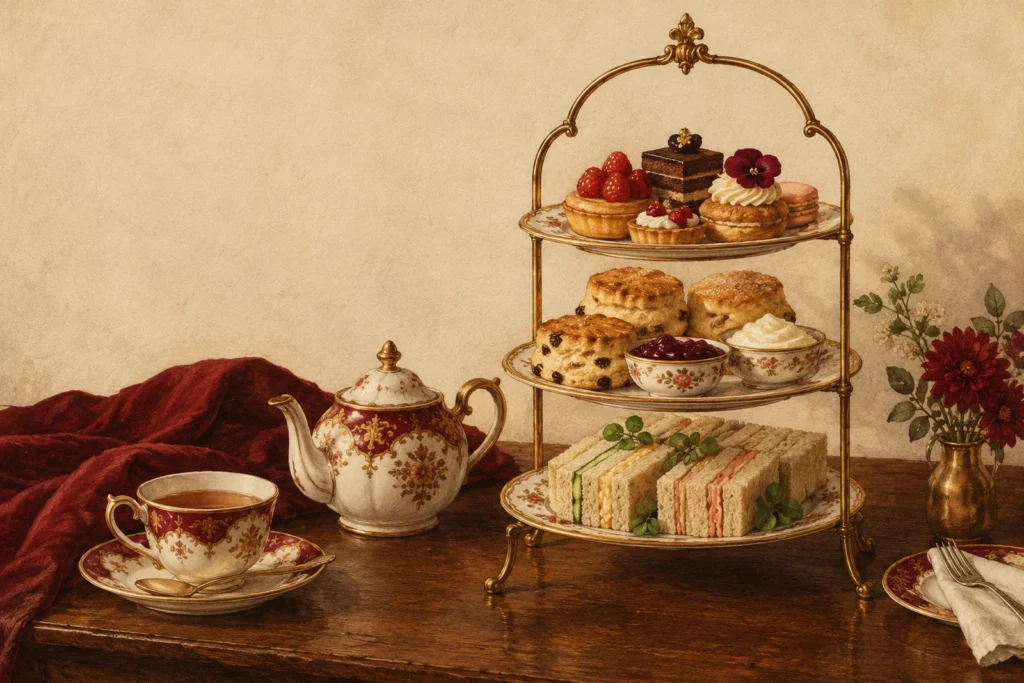
☞ The order of the tiers is conventional: sandwiches at the bottom, scones in the middle, cakes and pastries on top, eaten from the bottom up.
☞ Whether the milk goes into the cup before or after the tea was once a class marker, tied to the quality of the porcelain. George Orwell had firm views on it and argued for tea first.
Both rituals depend on a country that drinks tea by default, which was not always the case. That story is in why the British drink tea instead of coffee.
Frequently asked questions
Is high tea more formal than afternoon tea?
No, and historically it was the opposite. Afternoon tea was the leisured, decorative occasion. High tea was a practical evening meal for people who had finished a day’s work.
Why is it called high tea?
Because it was eaten at a high table, meaning the ordinary dining table, rather than at the low tables used in a drawing room for afternoon tea. The name describes the furniture, not the status of the meal.
What time is afternoon tea served?
Traditionally around four o’clock, in the gap between lunch and a late dinner. Hotels today run sittings across much of the afternoon.
What is the difference between cream tea and afternoon tea?
A cream tea is scones with clotted cream and jam, plus tea. Afternoon tea adds finger sandwiches and a selection of cakes and pastries, usually presented on a tiered stand.
Back to the full guide: everything worth knowing about tea.