Matcha is a green tea, and calling it one is technically correct and practically useless. It is grown differently, processed differently, prepared differently, and consumed differently. With ordinary green tea you steep leaves and throw them away. With matcha you drink the leaf itself, suspended in water.
Weeks in the Dark
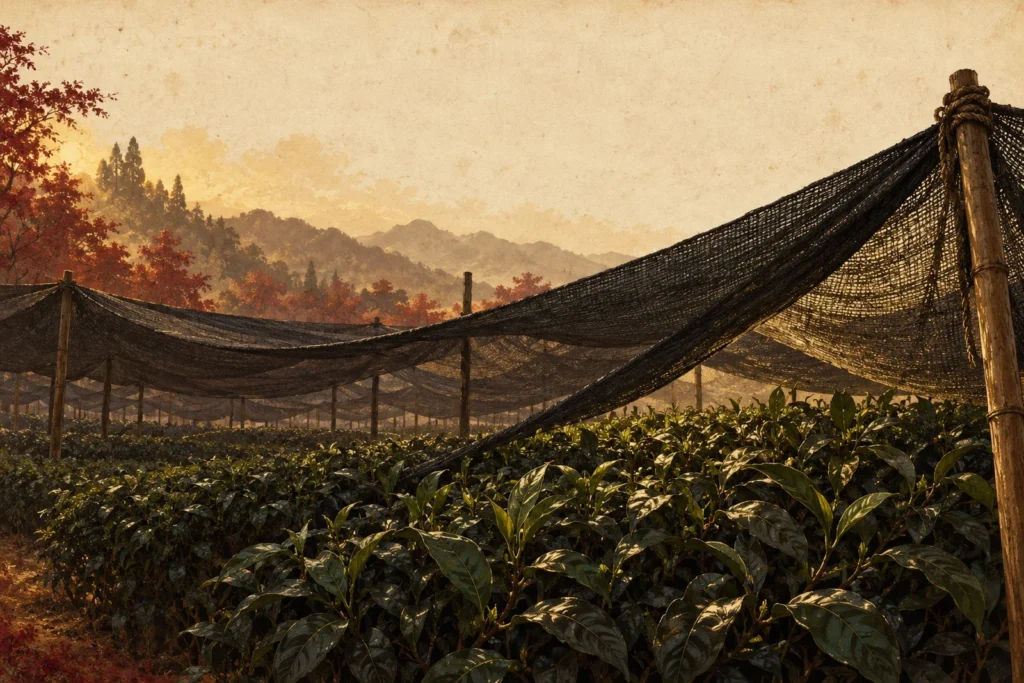
Roughly three to four weeks before harvest, the bushes are covered. Traditionally with straw and reed screens, now usually with black netting, cutting most of the sunlight.
The plant responds by producing more chlorophyll, which deepens the color, and by retaining more of the amino acid L-theanine, which would otherwise be converted into the polyphenols that make tea astringent. That is the whole trick: shading raises the sweet, savory, brothy quality the Japanese call umami and lowers the bitterness. It also stresses the plant and reduces yield, which is one reason matcha costs what it does.
Tencha, Not Sencha
After picking, the leaves are steamed quickly to stop oxidation, then dried. Here matcha diverges from ordinary Japanese green tea: sencha leaves are rolled into needles, while matcha leaves are left flat and unrolled. That flat dried leaf is called tencha.
The tencha is then stripped of stems and veins, so only the soft leaf flesh remains. Nothing else in tea is refined to this degree before it is even ground.
Ground Slowly, On Stone
Good matcha is milled between granite stones that turn slowly, because heat damages the aroma and dulls the color. The mills are deliberately unhurried, and an hour of grinding yields a small quantity of powder. Cheaper matcha is milled industrially at speed, which is a large part of why it tastes flatter and looks duller.
| Matcha | Ordinary green tea | |
|---|---|---|
| Growing | Shaded for weeks before harvest | Full sun |
| Leaf | Stems and veins removed | Whole leaf |
| Form | Stone ground powder | Loose leaf |
| Method | Whisked and suspended | Steeped and strained |
| What you consume | The whole leaf | Only what dissolves |
Ceremonial and Culinary Are Marketing Words
The grades sold as ceremonial and culinary are not a regulated classification. In practice the distinction tracks something real: younger leaves from the first harvest, finely ground, give a bright green powder that is sweet enough to drink with nothing but water, while older, coarser leaf gives a duller, more astringent powder that holds up inside milk, sugar and baking.
Color is the most useful quick test. Vivid, almost fluorescent green suggests shaded young leaf and careful milling. Yellowish or olive powder suggests the opposite, or matcha that has been sitting open too long.
Caffeine, and the Reason It Feels Different
Because you consume the leaf rather than an infusion of it, a bowl of matcha delivers more caffeine than a cup of steeped green tea made with a comparable amount of leaf. It also delivers considerably more L-theanine, thanks to the shading, and that combination is what people are describing when they call the effect calmer or steadier than coffee.
How It Is Prepared
Matcha is sifted to break up clumps, then whisked with water below boiling, around 70 to 80 degrees, using a bamboo whisk in a brisk motion until it foams. Boiling water scorches it and turns it bitter. Whisked thin it is called usucha; whisked thick, with far more powder and less water, it is koicha, which is what is served in the tea ceremony.
☞ Matcha does not keep. Ground leaf oxidizes quickly once opened, so it is bought in small tins, kept cold and dark, and used within weeks rather than months.
The shading technique that defines matcha is a deliberate manipulation of the conditions described in tea terroir, and where matcha sits among the other categories is covered in all tea comes from the same plant.
Frequently asked questions
Is matcha green tea?
Yes, matcha is a type of green tea. It is shade grown, stripped of stems and veins, stone ground into powder, and drunk whole rather than steeped and discarded, which makes it different from ordinary green tea in almost every practical respect.
Does matcha have more caffeine than green tea?
Generally yes, because you consume the entire leaf instead of only what dissolves in water. The exact amount depends on the grade and on how much powder goes into the bowl.
Why is matcha so expensive?
Shading reduces yield, the stems and veins are discarded, and stone milling is slow and produces small quantities. The best matcha also comes from a limited number of regions with long established reputations, Uji foremost among them.
What is the difference between ceremonial and culinary matcha?
The terms are not regulated. In practice ceremonial grade means younger first harvest leaf, finely ground, bright green and sweet enough to drink with water alone, while culinary grade is coarser and more astringent, intended for lattes and baking where other ingredients carry it.
Back to the full guide: everything worth knowing about tea.