Botanically, no. Tea comes from one plant, Camellia sinensis. Chamomile, peppermint, rooibos, hibiscus and the rest come from entirely unrelated plants, and the only thing they share with tea is the method: something dried, steeped in hot water, strained and drunk. The correct word for them is tisane, or simply herbal infusion.
Why the Label Says Tea Anyway
Language followed the method rather than the plant. If it is served in a cup, steeped from dried leaves or flowers and drunk hot, English calls it tea. The usage is centuries old and is not going to be corrected by anyone. Specialist sellers tend to write herbal infusion or tisane on the packet, mostly to signal that they know the difference.
The distinction still matters in two practical ways: caffeine and flavor chemistry. Neither behaves the way it does in true tea.
What Is Actually in the Cup
| Infusion | Plant and part used | Caffeine |
|---|---|---|
| Chamomile | Dried flower heads | None |
| Peppermint | Leaves | None |
| Rooibos | Leaves of a South African shrub | None |
| Hibiscus | Dried calyces of the flower | None |
| Ginger | Root | None |
| Yerba mate | Leaves of a South American holly | Yes |
| Guayusa | Leaves of a related holly | Yes |
The last two are the reason blanket statements about herbal tea being caffeine free are wrong. Yerba mate and guayusa are not Camellia sinensis, so they count as herbal by the usual definition, and both carry a meaningful dose of caffeine.
Rooibos, the Closest Thing to a Substitute
Rooibos comes from a shrub that grows in a small part of South Africa and almost nowhere else. It is naturally caffeine free, low in the tannins that make over-brewed tea bitter, and it takes milk without collapsing, which is why it works as a stand-in for a strong breakfast cup. It is also processed in a way that mirrors tea making: the leaves are bruised and left to oxidize, which turns them red, and unoxidized green rooibos is sold as a separate product.
Fruit Infusions and the Fine Print
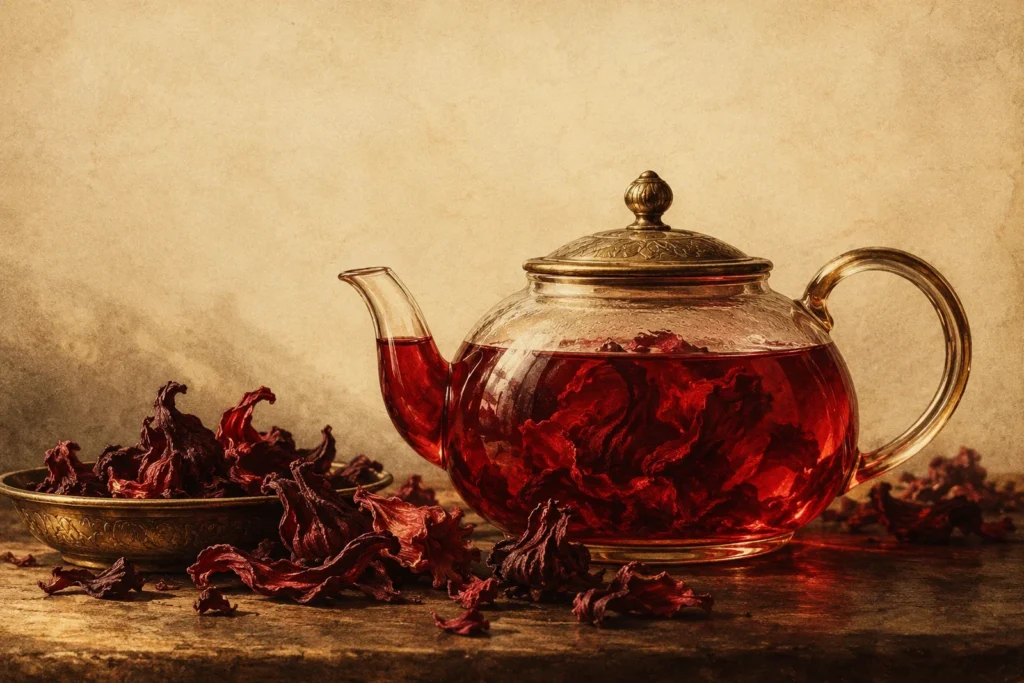
Bright fruit infusions are usually built on a base of hibiscus and rosehip, with apple pieces for bulk and flavoring for the rest. The color almost always comes from hibiscus rather than from berries. Reading the ingredient list in descending order tells you quickly whether you are buying fruit or buying hibiscus with fruit flavoring.
Brewing Is Not the Same Either
Green tea is ruined by boiling water and a long steep. Most herbal infusions are not: flowers, roots and barks generally need water at full boil and considerably longer in the pot to give up anything at all. Roots and barks are often simmered rather than steeped. Treating a tisane with the delicacy that a good green tea demands usually produces a weak, disappointing cup.
☞ Some blends mix both worlds. A packet labeled as a herbal blend may still contain green or black tea, and therefore caffeine, so the ingredient list is worth checking if that matters to you.
The full picture of what does count as tea, and how one leaf becomes six categories, is in all tea comes from the same plant.
Frequently asked questions
Is herbal tea real tea?
Not botanically. True tea comes from Camellia sinensis. Herbal infusions come from other plants entirely and are more accurately called tisanes, although almost everyone calls them tea.
Is all herbal tea caffeine free?
No. Yerba mate and guayusa both contain caffeine despite being herbal by the usual definition. Chamomile, peppermint, rooibos, hibiscus and ginger do not.
What is a tisane?
A tisane is an infusion made from any plant material other than the tea plant: flowers, leaves, roots, bark, seeds or fruit. It is the technically correct term for what is sold as herbal tea.
Is rooibos better than tea?
It is different. Rooibos is caffeine free and low in tannins, so it suits late evenings and repeated cups, and it takes milk well. It does not taste like tea and is not a replacement for one if the flavor is what you are after.
Back to the full guide: everything worth knowing about tea.